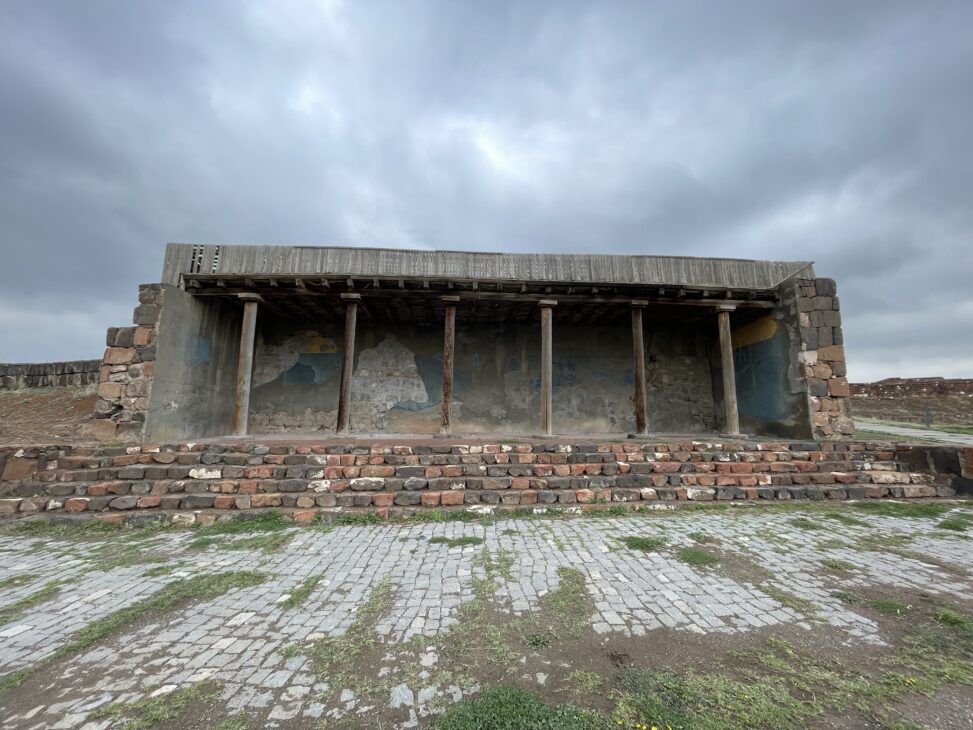
Atop a large hill near Yerevan, the capital city of Armenia, lie the ruins of the 2800-year-old Fortress Erebuni. Although it has collapsed, and not much of it remains, it is still beautiful in its own way. In fact, some of it is very well-preserved, and parts of it have been excavated, and are now on display in the museum located beneath it, on the foot of the hill. Many artefacts were actually of very good quality, such as ceramic pots, and metal weapons. Also, the elaborate frescos that were painted all those years ago are still partly visible, though some have eroded completely over time. Although professional photography was not permitted, I got a good snap of this flower pattern on one of the buildings:
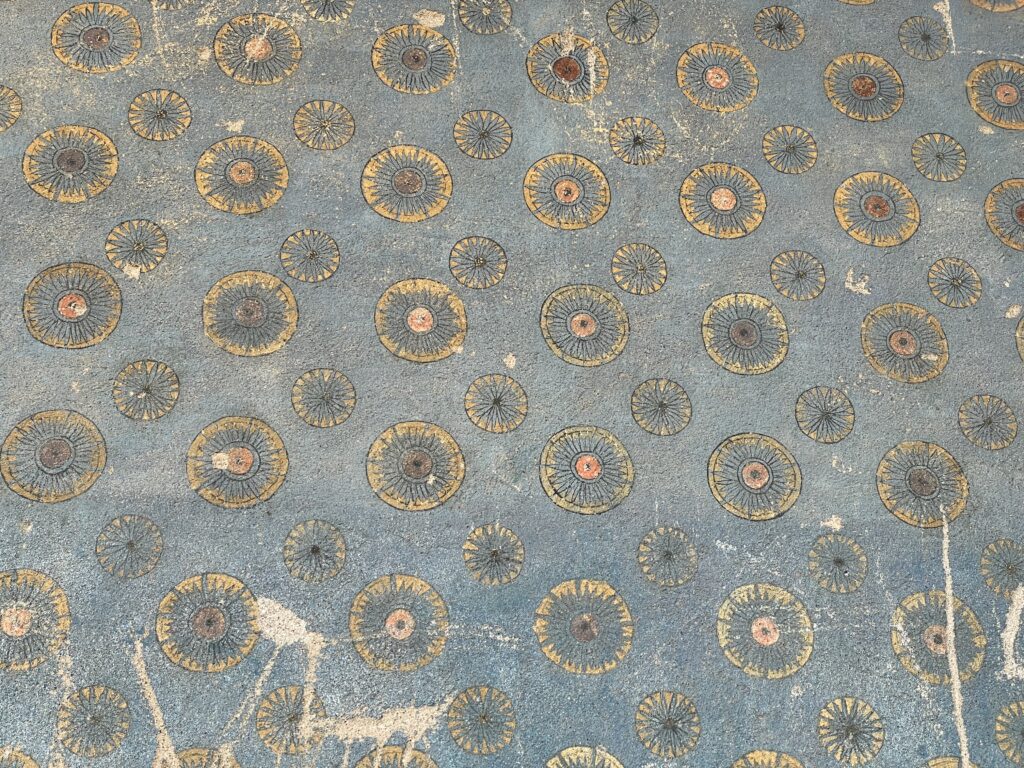
Interestingly, the blue paint was bartered for and exported from the land of the Egyptians, an ancient civilisation in Africa, who live far from Great Armenia. Other frescos were decorated with fantastical scenes and patterns, that included genies and The Tree of Life. Many also involved bulls or lions, which represented the main gods. There was also often a pattern of a structure resembling three steps, which are visible on the following photo if you look closely:
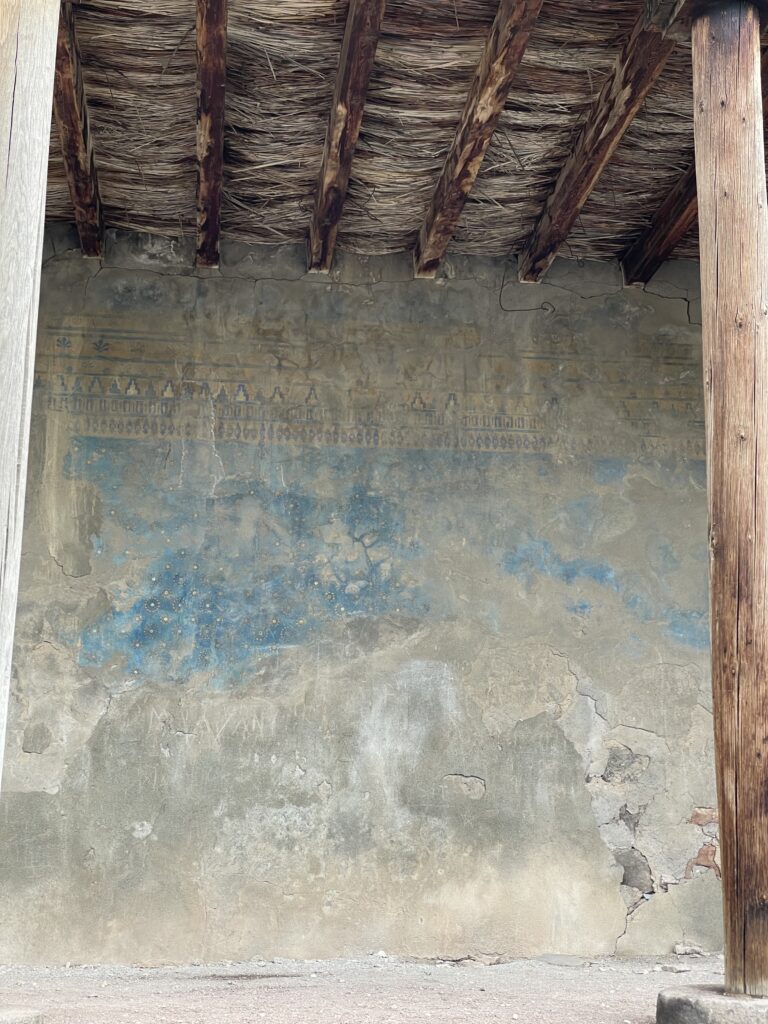
Although it is barely visible now, The Fortress Erebuni was actually split into three main parts: The Royal part, where important and powerful people were housed; The Religious part, where religious services were carried out and sacrifices were made; And the Housing part, where slaves and servants lived. There were quite a few people working for the king at that time, so when he moved into Erebuni, and took many of the slaves with him, he needed to keep them happy somehow. He decided to build a small painted blue temple for them, as they had their own gods, preventing hate and, if it came to it, rebellion.
Nowadays, most of the walls have crumbled, and have only the basis remaining, but a few structures STILL stand, for instance the photo at the top shows a rock wall held up by six solid wooden columns. In another of these sorts of buildings, the columns were the only part that survived, and there is a large pile of them there. However, although most of it is gone, I find it amazing that the foundations of the Fortress are still there, after all these years.
Here is one of the sturdier walls I found:
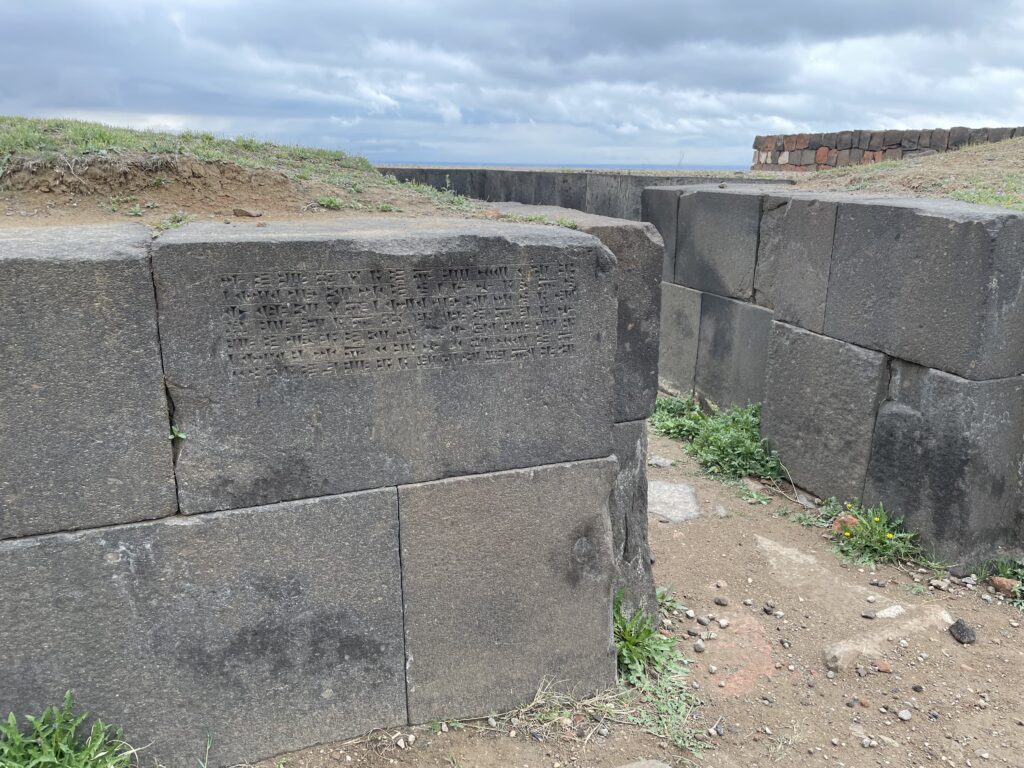
Above is a photo of the temple that the king built for his slaves and servants. As you can probably see, not much of it is visible now, especially the blue paint. However, if you look closely at the left side, you should be able to see some strange symbols, like hieroglyphs. This is a very old style of Armenian writing, called cuneiform. Most cuneiform starts with the words, “To the glory of the god Khaldi…” because it showed his relationship with the god was close, and that Khaldi (who was the Armenian main god) wanted the king to do this, reassuring them that it was a good thing. There are many more slabs of stone with cuneiform written on them in the museum, so I was quite surprised, at first, to find this there. Historians know this all, because they may have figured out how to read many of the symbols, and they also know how each cuneiform starts. Did you know that each symbol represents a syllable, and it is written with no spaces or punctuation?
Nowadays, the Fortress is overgrown with flowers, and is even home to wheatears, a species of bird that has a greyish-orange underbelly, a brownish back, and a black band around its eye.
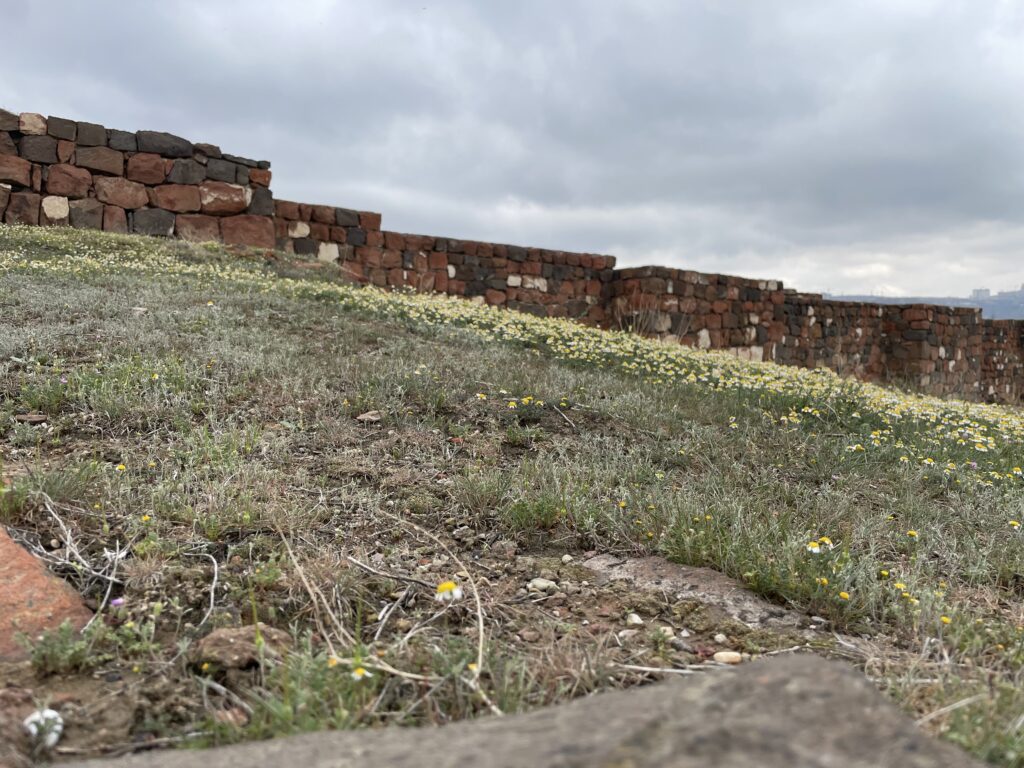
I truly enjoyed my visit to Erebuni, and I hope you liked reading a little bit about its history.
Ирина
Солнышко мое! Ты так интересно написала и много!!! Молодец! Мне очень понравилось! Я не знала ничего из написанного тобой! Продолжай, у тебя очень хорошо получается! 👏🏾❤️🩷😍
Yury
It is amazing that wooden columns have survived for several thousand years.